
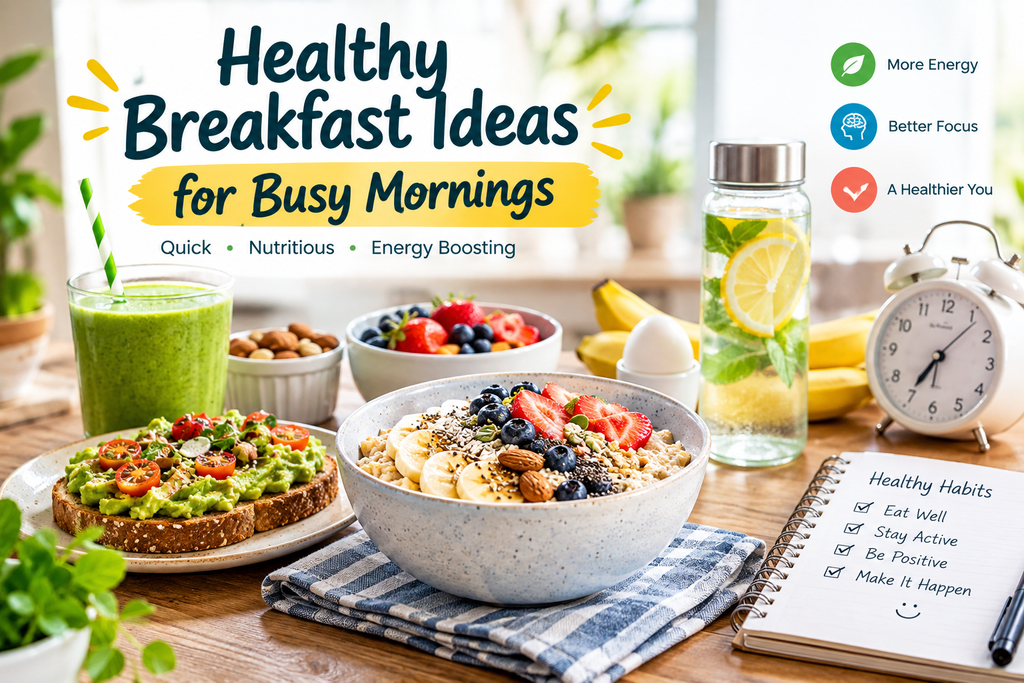
Quick, healthy breakfast ideas for busy mornings, all ready in five minutes or less, plus the mistakes to avoid.
For about two years, my breakfast was a gas station coffee and whatever I could grab on the way to the train. Sometimes that meant a croissant. Sometimes it meant nothing at all, followed by a 10:30 AM crash where I’d stare at my screen, re-read the same email three times, and then raid the office snack drawer like a raccoon.
I told myself I “just wasn’t a breakfast person.” That was a lie. I was a “didn’t plan ahead” person, and those are very different things.
What finally changed things wasn’t a fancy meal-prep Sunday or a new diet. It was a handful of small, boring, repeatable breakfasts that take five minutes or less. I’ve tested a lot of them over the past couple of years, some great, some embarrassing failures, and this is the shortlist that actually survived real mornings.
First, What Counts as a “Healthy” Breakfast?
I’m not a nutritionist, and I’m not going to pretend there’s one perfect formula. Everyone’s body, schedule, and dietary needs are different. If you have a medical condition, allergies, or specific dietary requirements, talk to a doctor or registered dietitian rather than taking advice from a blog post.
That said, here’s the rough rule I settled on after plenty of trial and error: a breakfast works for me when it has some protein, some fiber, and doesn’t leave me hungry again within an hour. Protein and fiber tend to keep you fuller for longer than a pastry or sugary cereal does, and that matched my own experience pretty clearly.
That’s it. No counting, no apps tracking every gram. Just a simple check: is there something filling in this meal?
The Mistakes I Made First (So You Can Skip Them)
I bought “healthy” breakfast products without reading labels. Some granola bars, flavored yogurts, and breakfast cereals marketed as healthy are packed with added sugar. I once ate a “protein” granola bar every morning for a month before I actually flipped it over and realized it had about as much sugar as a candy bar. Check the label, especially the sugar line.
I tried to cook elaborate breakfasts on weekdays. I got ambitious for about nine days. Then I stopped, because nobody has time to poach eggs at 7:15 AM when the bus leaves at 7:40.
I prepped way too much food at once. I made a huge batch of overnight oats, felt very proud, and by day four I couldn’t stand the sight of them. Making a smaller batch and rotating options worked far better for me.
I skipped breakfast entirely and called it “intermittent fasting.” For some people, skipping breakfast works fine. For me, it mostly meant I got cranky, ate badly at lunch, and had zero focus before noon. Pay attention to how your own body responds rather than copying whatever’s trending.
Ideas That Take Five Minutes or Less
1. Overnight Oats
This is the one that finally made me a breakfast person. You mix rolled oats with milk (dairy or plant-based) and yogurt in a jar the night before, add a spoonful of chia seeds if you like, and leave it in the fridge. In the morning, top it with fruit or nuts and eat it straight from the jar.
My basic version: half a cup of rolled oats, half a cup of milk, a few spoonfuls of Greek yogurt, and a little honey or maple syrup. In the morning I add banana slices or berries and a handful of walnuts.
It takes about three minutes the night before and zero minutes in the morning. If you’re someone who can’t stand the cold texture, you can microwave it for a minute and it turns into regular porridge.
2. Greek Yogurt Bowl
Plain Greek yogurt, fruit, and something crunchy. That’s the whole recipe. I use whatever fruit is in season, plus a few nuts or a small sprinkle of granola.
Buying plain yogurt and adding your own fruit is a lot cheaper and usually less sugary than buying pre-flavored cups. If plain tastes too sour, a small drizzle of honey fixes it.
3. Scrambled Eggs in a Mug
I was skeptical about this one until I tried it. Crack two eggs into a microwave-safe mug, add a splash of milk and a pinch of salt, whisk with a fork, and microwave for about 60 to 90 seconds, stirring halfway through. Add some spinach or shredded cheese if you have it.
It’s not a gourmet meal, but it’s hot, protein-rich, and ready in under two minutes. Just watch the time, because overcooked microwave eggs turn rubbery fast. I learned that on my second attempt.
4. Peanut Butter Banana Toast
Wholegrain bread, a thin layer of peanut butter (or almond butter), and sliced banana on top. This is probably my most-used emergency breakfast, since I almost always have these three things at home.
Check the peanut butter ingredients if you care about added sugar and palm oil. The simplest ones list just peanuts and maybe salt.
5. Smoothies (With One Important Warning)
A basic smoothie is a great option when you’re running late: a banana, a handful of frozen berries, a scoop of yogurt or a spoonful of nut butter, and some milk, blended for 30 seconds.
My warning: a smoothie made of only fruit and juice isn’t very filling. Mine used to leave me hungry in an hour until I started adding yogurt, oats, or nut butter to give it some staying power.
A personal blender, the small single-serve kind you can drink straight from, made a real difference for me. Washing a huge blender jug on a weekday morning was the exact kind of friction that made me quit smoothies the first time.
6. Hard-Boiled Eggs
Boil a handful on Sunday evening, keep them in the fridge, and grab one or two on the way out the door. Pair them with a piece of fruit or a slice of toast and you’ve got a decent breakfast in about thirty seconds.
Peeled eggs keep fine in the fridge for several days if stored properly, but I always peel them just before eating, because the shell helps them stay fresher.
7. Cottage Cheese and Fruit
I was suspicious of cottage cheese for years because of the texture. Then a friend made me try it with pineapple or peaches, and I’ve been eating it ever since.
It’s high in protein, it takes zero prep, and it works as a quick breakfast or a snack. If the texture bothers you, blending it smooth turns it into something closer to a thick yogurt.
8. Chia Pudding
Similar idea to overnight oats but with chia seeds. Mix about three tablespoons of chia seeds with a cup of milk, stir well (stir it again after ten minutes, or it clumps), and refrigerate overnight.
It sets into a pudding-like texture. Add fruit in the morning. Some people love it, others find the texture odd, so try a small batch first.
9. Breakfast Wraps
Scramble a couple of eggs, add some cheese and whatever vegetables you have, and roll everything into a tortilla. You can make several at once, wrap them in foil, and keep them in the fridge or freezer.
Reheat in the microwave for a minute or so. These saved me on mornings when I needed something I could eat with one hand on the commute.
10. Whole Grain Cereal With a Protein Boost
Not every morning needs to be a project. Sometimes a bowl of wholegrain, low-sugar cereal with milk is fine. If it doesn’t keep you full, add a spoonful of nut butter on the side, or toss in some nuts and seeds.
Step-by-Step: How I Built a Breakfast Routine That Actually Stuck
Step 1: Pick just two or three breakfasts to start
Don’t try to rotate ten different recipes in your first week. I started with overnight oats and peanut butter toast, and that’s all I ate for a month. Boring, but it removed the daily decision.
Step 2: Do a quick grocery check once a week
I keep a short, repeating list: oats, eggs, yogurt, bananas, bread, peanut butter, and some frozen fruit. When those items are always in the house, the morning decision is basically made for me.
Frozen fruit, by the way, is underrated. It’s usually cheaper, lasts for months, and works perfectly in smoothies and oats.
Step 3: Prep one thing the night before
Not everything, just one thing. Set out the jar for oats, boil a couple of eggs, or put the blender cup next to the fruit. Reducing the morning workload by even a little made a real difference for me.
Step 4: Use your phone for planning, not perfection
I use a simple notes app to keep my breakfast rotation and grocery list. Some people like meal-planning apps such as Mealime or Yummly for recipe ideas, and those can be useful for inspiration. Honestly, though, a basic list in your notes app works fine if you don’t want yet another app on your phone.
Step 5: Keep a “bad morning” backup
Every few weeks there’s a morning where everything goes wrong. I keep a backup in the cupboard or desk drawer: a small bag of unsalted nuts, a banana, or an instant oatmeal packet (the plain kind, not the sugary flavored ones). It’s not the best breakfast, but it beats skipping the meal and buying a pastry.
Step 6: Adjust based on how you actually feel
After a couple of weeks, pay attention. Are you hungry again by 10 AM? Add more protein or fiber. Feeling sluggish after a particular meal? Try swapping it out. This isn’t a strict program, and there’s no gold star for sticking with something that doesn’t work for you.
Real Examples From People I Know
My coworker, who commutes about an hour each way, swears by breakfast wraps. She batch-makes about six on Sunday, freezes them, and microwaves one each morning. She told me the biggest benefit wasn’t the nutrition, it was never having to think about breakfast at all.
A friend with two young kids relies on overnight oats and fruit because it’s something she can prep after the kids are asleep, and it requires no cooking in the chaos of the morning. She makes it in individual jars so everyone in the house can grab one.
My brother, who goes to the gym early, keeps it simple with Greek yogurt, a banana, and a handful of nuts. No cooking, no cleanup, and he can eat it in the car if he’s running late.
I tend to rotate between oats, toast, and mug eggs depending on my mood and what’s in the fridge. I’m not perfect about it, and some weeks I fall back on a less-than-ideal option. That’s fine.
More Mistakes Worth Avoiding
Relying on “healthy” packaged foods without checking the label. Words like “natural,” “protein,” or “wholegrain” on the front don’t tell you much about the sugar or ingredient list on the back.
Making breakfast too complicated. If it takes more than ten minutes, you’ll probably stop doing it within a couple of weeks. Simple wins.
Ignoring your own hunger signals. If you’re genuinely not hungry first thing in the morning, forcing a huge meal isn’t necessarily helpful. A small breakfast or a snack a bit later might suit you better.
Skipping variety completely. Eating the exact same thing forever works for some people, but I got bored and fell off the wagon. Having two or three rotating options kept me from quitting.
Forgetting about food safety. Eggs, dairy, and prepped meals need proper refrigeration. If something looks or smells off, don’t risk it.
Not drinking any water. I used to go straight from bed to coffee, with no water at all. Having a glass of water with breakfast became a small habit that I now do automatically.
A Quick Note on Dietary Needs
Everything above is based on my own experience and general good-sense eating, not medical advice. If you’re managing diabetes, food allergies, intolerances, a medical condition, or pregnancy, or you follow a specific diet, check with a healthcare professional before changing your eating habits. Many of these ideas can be adapted (dairy-free milk, gluten-free oats, egg-free options), but you know your own situation best.
Final Thoughts
The funny thing is that once I stopped treating breakfast like a big deal, I actually started eating it consistently. No elaborate plans, no perfect macro balance, just a few easy options that I could make half-asleep.
If your mornings are chaotic right now, don’t try to overhaul everything at once. Pick one idea from this list, try it for a week, and see how it feels. If it works, keep it. If it doesn’t, swap it out for another one.
The best breakfast is the one you’ll actually eat on a Tuesday morning when you’re running late and can’t find your keys.
